


WORLD
UK AND EU REACH NEW AGREEMENT ON FOOD EXPORTS, YOUTH MOBILITY AND EMISSIONS
The United Kingdom and the European Union have reached a new agreement covering food exports, youth mobility and carbon emissions, in a move aimed at improving relations and strengthening cooperation following Brexit.
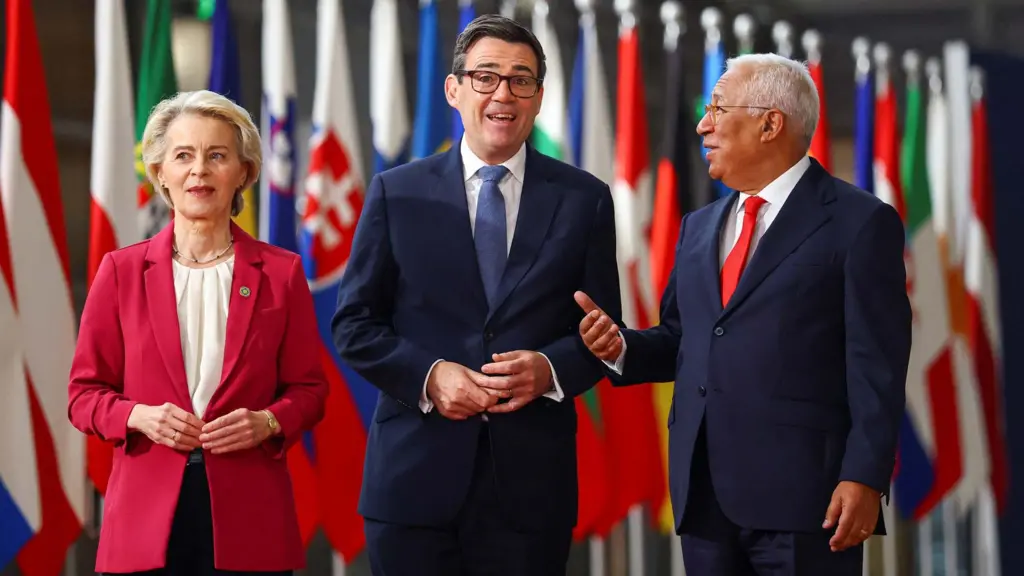
The agreement was announced after a summit in Brussels involving UK Prime Minister Andy Burnham, European Commission President Ursula von der Leyen and European Council President António Costa.
The leaders described the outcome as a major step towards rebuilding relations between both sides, with Burnham calling it a historic moment and saying British citizens wanted a better relationship with the EU than the arrangements that followed Brexit.
Under the new youth mobility scheme, people aged between 18 and 31 from the UK and EU member states will be allowed to work, study or travel in participating countries for up to three years.
The programme is expected to accommodate 100,000 British citizens travelling to the EU and another 100,000 EU citizens coming to the UK annually.
Participants will initially apply to live in one country but will be allowed to move to two other countries during their three-year stay, provided they spend at least 12 months in each country before switching.
Applicants will be required to pay an application fee and demonstrate that they have sufficient funds to support themselves. They will also be prohibited from accessing welfare benefits or bringing dependants, including children.
The agreement also includes provisions covering food exports and emissions, although negotiations over reduced university tuition fees for European students in the UK remain unresolved.
European Commission President von der Leyen expressed confidence that both sides would eventually reach an agreement on the tuition fee issue, describing the latest developments as a major success.
European Council President Costa also confirmed that British students would be able to participate in the Erasmus Plus programme from 2027, providing greater opportunities to study in European countries.
However, the agreements have attracted criticism from Brexit supporters. Reform UK leader Nigel Farage questioned the government's democratic mandate to pursue closer relations with the EU.
Despite the disagreements, both sides have expressed willingness to continue negotiations and expand cooperation in areas that could benefit their citizens and economies.