


WORLD
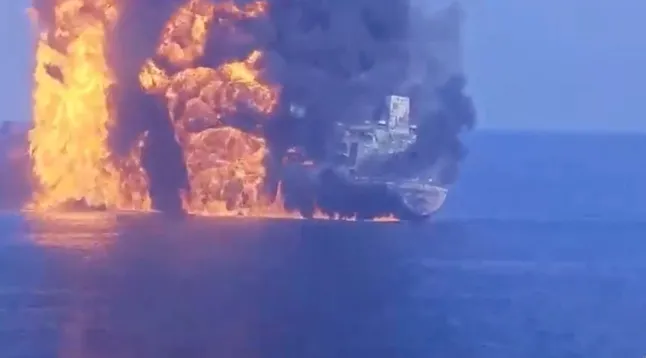
TANKER CREW UNACCOUNTED FOR AFTER REPORTED ATTACKS NEAR STRAIT OF HORMUZ
A tanker caught fire near Oman’s coast following two reported strikes, leaving its crew unaccounted for, according to the UK Maritime Trade Operations agency.
The vessel was travelling near Khasab on Tuesday evening when the first reported strike caused a fire in its engine room. A second strike later sparked another fire onboard.
In an update on Wednesday, November 18, UKMTO said the extent of the damage remained unknown and authorities were investigating.
The agency advised vessels in the area to proceed cautiously and report suspicious activity.
Footage circulating online showed a vessel engulfed in flames, with thick black smoke rising above it. The number of crew members aboard and their whereabouts had not been established.
Sources identified the vessel as a Panamanian-flagged Tara Gas tanker, although its identity had not been formally confirmed.
Iran’s navy said a tanker had suffered significant damage and accused it of entering a restricted area with its navigation system switched off. That allegation has not been independently verified, and responsibility for the reported strikes remains unclear.
The incident adds to security concerns around the Strait of Hormuz, a major shipping route through which about a fifth of the world’s oil shipments passes.
Continuing insecurity in the passage has disrupted shipping and increased pressure on global trade and fuel supplies.