


WORLD
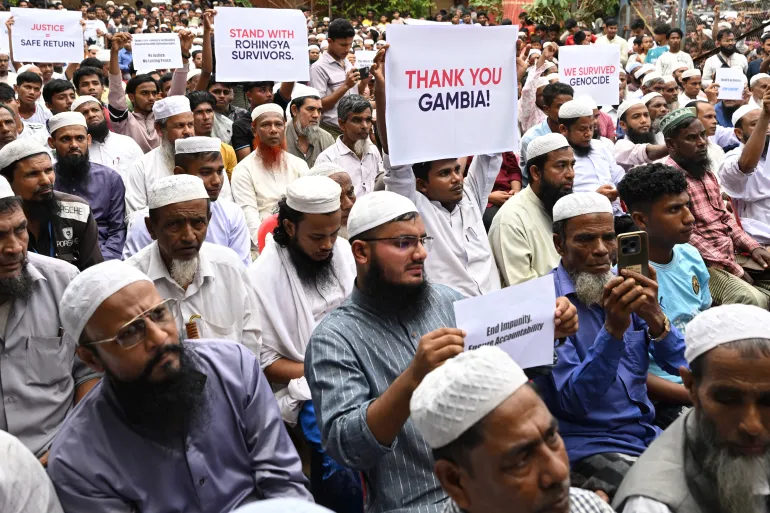
ROHINGYA REFUGEES CELEBRATE ICJ GENOCIDE RULING, HOPE FOR SAFE RETURN TO MYANMAR
Rohingya refugees living in camps in Bangladesh have expressed joy and relief after the International Court of Justice (ICJ) ruled that Myanmar committed genocide against their community, but many say their greatest hope is to return safely to their homeland.
The landmark ruling, delivered on Thursday, November 19, followed a case brought against Myanmar by The Gambia over the military operations against the Rohingya population in 2017.
The court found Myanmar responsible for genocide during the brutal military campaign, which left thousands dead and forced hundreds of thousands of Rohingya to flee their homes.
For refugees who have spent years seeking international recognition and justice, the decision has brought renewed hope and emotional relief.
In Cox's Bazar, Bangladesh, where thousands of displaced Rohingya live in refugee camps, many residents followed the court proceedings through mobile phones, laptops and television screens.
One refugee, Umme Ruman, said she broke down in tears of joy after seeing the news confirming the court's decision. She described the ruling as recognition of the suffering her community had endured.
Another refugee, 18-year-old Mohammad Rehan, said women in his community cried and prayed as the announcement spread through the camps. He expressed hope that the decision could eventually create an opportunity for the Rohingya to return home.
However, the ruling also brought back painful memories for survivors who lost relatives, homes and loved ones during the violence.
Rohingya youth Nurul Amin said he was happy that the international community had acknowledged the atrocities but could not forget the suffering he experienced during the 2017 military operation.
Rohingya activist Rohimullah also described the judgment as an important moment for justice, while noting that it could not restore the lives lost or erase the painful memories of displacement.
Meanwhile, Professor Nasir Uddin of the University of Chittagong described the ruling as an important step towards international accountability.
South Asia expert Michael Kugelman said the judgment could also influence negotiations between Bangladesh and Myanmar over the return of refugees, stressing the need for stronger assurances that any repatriation would be safe.
Despite celebrating the legal victory, many Rohingya refugees remain uncertain about their future, with safe return, security and the restoration of their rights still among their biggest concerns.