


BUSINESS &ECOMONY
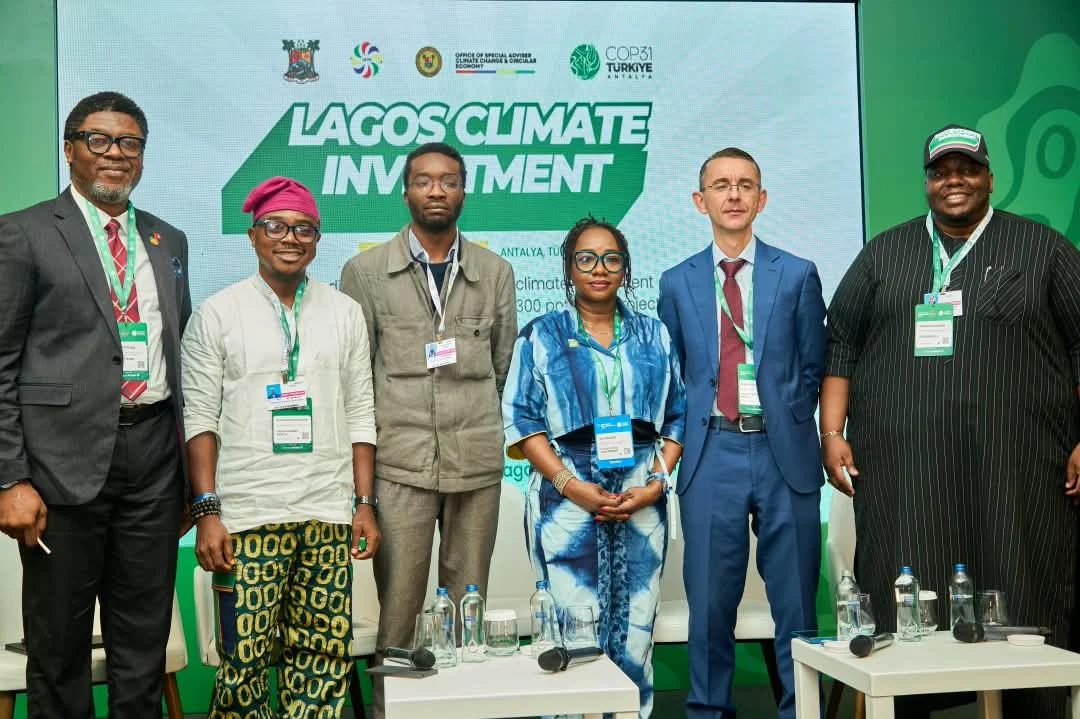
LAGOS SEEKS INVESTORS FOR CLIMATE PROJECTS WORTH UP TO $50BN
The Lagos State Government says it is attracting investor interest in its proposed $25 billion–$50 billion climate investment pipeline following meetings at the COP31 climate conference in Antalya, Türkiye.
The state presented more than 300 potential projects covering clean energy, transportation, water management, agriculture, waste recycling and climate resilience.
Special Adviser to the Governor on Climate Change and Circular Economy, Titilayo Oshodi, said discussions had opened opportunities for partnerships in solar energy, healthcare, clean transportation and women’s empowerment.
She said the priority was to turn investor interest and pledges into funded projects that create jobs and improve residents’ lives.
“Let’s turn our pledges into projects. Let’s turn our projects into jobs,” Oshodi said.
According to a member of the Lagos delegation, five investors expressed willingness to support projects, including health insurance initiatives intended to reduce out-of-pocket medical expenses.
Sterling Bank also indicated support for providing between 50 and 100 tricycles for women’s empowerment programmes, while Worldwide Energy pledged to install solar power at a primary healthcare centre.
Private-sector partners Tonye Cole and Funke Shobanjo expressed support through a sustainable finance platform designed to connect investment capital with local projects.
The discussions remain at an early stage, with the state seeking to convert its project pipeline into bankable investments.
Meanwhile, Lagos Commissioner for Energy and Mineral Resources, Biodun Ogunleye, said private financing would be essential to meeting the state’s estimated electricity demand of 12,000 megawatts.
He said Lagos was targeting an additional 2,000 megawatts of capacity and had established regulatory institutions to encourage investment in generation, distribution and mini-grids.
Ogunleye added that the government was willing to explore guarantees and risk-sharing arrangements to make priority projects more attractive to lenders.