


WORLD REPORT
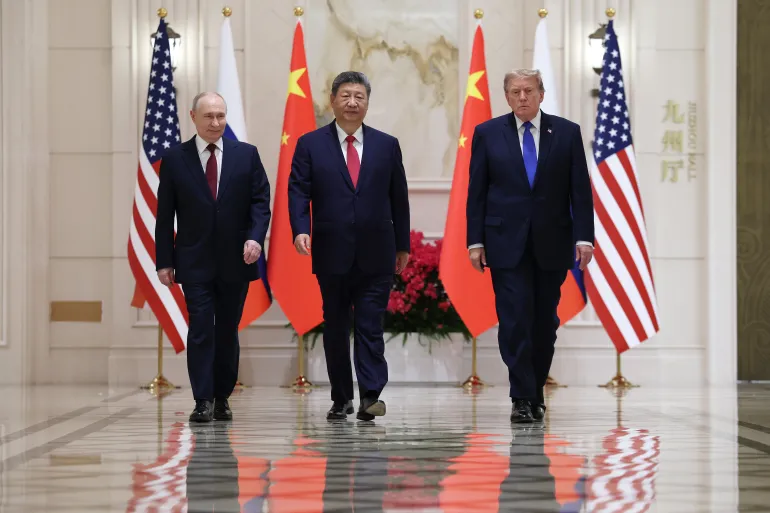
FIVE KEY TAKEAWAYS FROM TRUMP, XI AND PUTIN’S CHINA SUMMIT
US President Donald Trump, Chinese President Xi Jinping and Russian President Vladimir Putin have issued a joint “peace declaration” following three-way talks in Shenzhen on Thursday.
The meeting, held alongside the Asia-Pacific Economic Cooperation summit, covered nuclear risks, energy security and cooperation between the three powers.
Here are five key takeaways:
A commitment to greater dialogue
The leaders presented the meeting as an opportunity to improve relations despite their differences. Xi urged them to abandon a “Cold War mentality”, while Trump argued that refusing dialogue would not deliver peace.
Support for stable energy supplies
The declaration stressed the importance of maintaining global energy flows. However, no detailed plan was announced for addressing disruptions linked to the wars involving Iran and Ukraine.
Plans for nuclear-risk discussions
The three countries pledged dialogue on reducing nuclear risks and preventing proliferation. Xi said nuclear war must never be fought and called for a world without nuclear weapons. No binding disarmament agreement was announced.
Questions about future three-way cooperation
The summit raised speculation about a closer US-China-Russia grouping, although no formal “G3” alliance was established. Further engagement could take place at the G20 summit in Miami, to which Trump has invited Putin.
Joint criticism of the International Criminal Court
The declaration criticised the ICC and similar institutions, demanding that they not “abuse their positions”. None of the three countries is a member of the court.
Despite the leaders’ positive language, the meeting produced no announced settlement to the wars in Ukraine or Iran. How the declaration will translate into practical action remains unclear.