


BUSINESS &ECOMONY
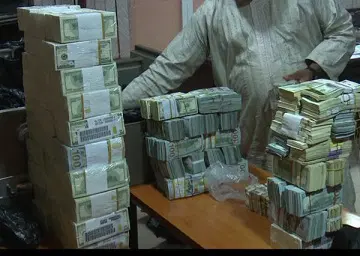
DOLLAR SCARCITY, FESTIVE DEMAND PUSH NAIRA TO N1,468/$
The naira weakened further against the United States dollar on Thursday, falling to N1,468 per dollar in the parallel market from N1,450 recorded on Wednesday, as tightening dollar supply and increased demand ahead of the festive season intensified pressure on the local currency.
The depreciation was also reflected in the official foreign exchange market, where the naira weakened to N1,388 per dollar at the Nigerian Foreign Exchange Market (NFEM), compared with N1,379.99 recorded the previous day.
The latest figures widened the gap between the parallel and official markets to N80 per dollar, up from N70.01 on Wednesday.
Data from the Central Bank of Nigeria (CBN) showed that interbank foreign exchange turnover increased by 59.13 per cent to $800.3 million on Thursday, compared with $502.9 million recorded on Wednesday.
Despite the increased trading activity, the naira continued to lose ground, reflecting pressure from rising demand and reduced foreign exchange inflows.
Vanguard's analysis showed that the currency had depreciated by N95 in the parallel market since October 31, when it traded at N1,373 per dollar. In the official market, it weakened by N42 from N1,346 recorded at the end of October.
Nigeria's external reserves also declined to $54.71 billion on November 18, 2026, representing a drop of $554 million from the peak of $55.264 billion recorded on October 27.
Chief Investment Officer of VNL Capital Asset Management, Dr Ubah Jeremiah, attributed the naira's weakness mainly to tightening dollar supply and seasonal demand rather than significant depletion of external reserves.
He said foreign exchange inflows had dropped sharply to approximately $807.6 million in the latest week from $2.48 billion previously, reducing the availability of dollars in the market.
Jeremiah explained that importers, businesses and individuals were increasing their dollar purchases ahead of the festive season and year-end financial obligations.
A parallel-market trader, Jubril Yinusa, also blamed the depreciation on rising demand and limited dollar supply, particularly from importers preparing for increased business activities.
Another trader, Isa Dauda, said the approaching 2027 general elections were adding to market uncertainty, noting that some foreign investors were adopting a wait-and-see approach before committing funds.
The developments highlight the continuing challenges facing Nigeria's foreign exchange market as seasonal demand, declining inflows and uncertainty over future economic conditions put pressure on the naira.