


POLITICS
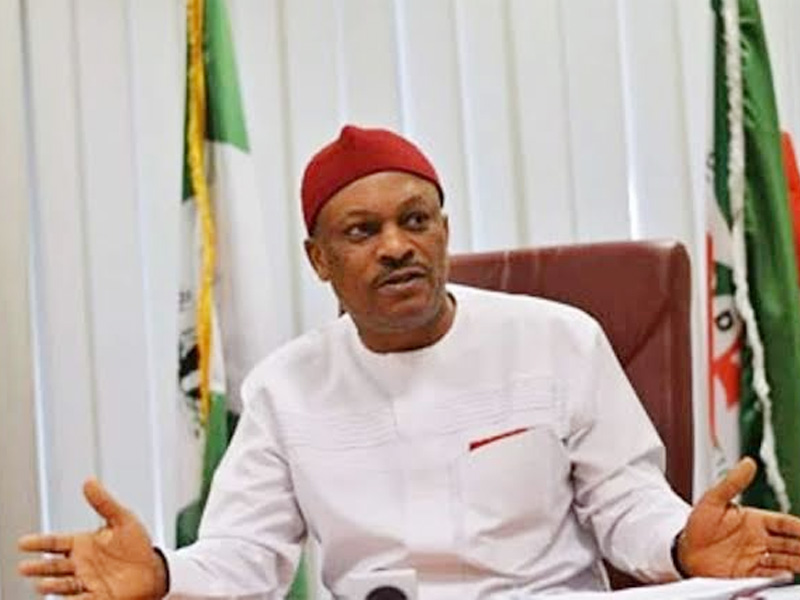
ANYANWU VOWS RAINBOW COALITION WILL DEFEAT APC IN IMO 2027 ELECTION
Japan’s football leadership has been thrown into uncertainty following the resignation of the Japan Football Association’s vice president amid controversy surrounding the World Cup.
The development has drawn attention to the pressure facing football administrators as national teams, governing bodies and supporters prepare for major international competitions. Disputes involving World Cup arrangements can quickly become sensitive issues, particularly when they affect national representation, tournament participation or relations between football authorities.
Japan has established itself as one of Asia’s strongest football nations, regularly qualifying for the FIFA World Cup and investing heavily in the development of players, coaching and domestic competitions. The national team enjoys considerable public support, making issues involving its football administration a matter of significant interest.
The controversy centres on the Asian Football Confederation’s backing for FIFA president Gianni Infantino ahead of the FIFA presidential election scheduled for March 2027. AFC president Sheikh Salman bin Ebrahim Al Khalifa announced the region’s support for Infantino during a meeting in Tokyo, a position that Japan’s football leadership indicated it would follow.
Infantino has faced criticism over a proposed investment initiative involving FIFA’s commercial rights, including World Cup-related properties. The plan attracted opposition from football organisations concerned about consultation, governance and transparency before it was withdrawn.
Okada, who coached Japan at the 1998 and 2010 World Cups, said he could no longer accept the gap between his personal convictions and the responses surrounding the tournament. He stressed that he had always valued the social importance of sport and believed it should be conducted with integrity.
Although he acknowledged the practical reasons for Japan aligning its position with the AFC, Okada said he had reached his decision after careful consideration.
His departure has highlighted tensions between football administrators’ institutional relationships and individual convictions about how the sport should be governed. It also raises questions about how national associations balance regional unity with demands for accountability and transparency in international football.
Anyanwu made the declaration in response to Imo State Governor Hope Uzodimma, who warned members of the All Progressives Congress (APC) against working with political coalitions outside the ruling party.
Uzodimma issued the warning on Tuesday during the inauguration of the Imo chapter of the PBAT Door-to-Door Movement, a political initiative mobilising support for President Bola Tinubu’s re-election in 2027. He insisted that APC members must remain loyal to the party and cautioned that campaign vehicles provided to movement coordinators could be withdrawn from those who worked outside its political structure.
“There is no rainbow coalition in Imo State,” the governor declared.
However, Anyanwu, through a statement issued by his media adviser, Ikenna Onuoha, dismissed the governor’s position, describing it as evidence that the ruling party was concerned about the emerging opposition alliance.
He argued that cooperation between the PDP and the Rainbow Coalition would provide Imo residents with an alternative to the APC-led administration. He also accused the state government of performing poorly in infrastructure, healthcare, education and economic development.
Anyanwu called on the government to prioritise rural road rehabilitation, improve healthcare facilities and address challenges affecting the state’s education sector. He specifically urged the administration to engage lecturers at Imo State University over a reported prolonged strike.
The PDP national secretary further accused the government of making promises without adequately addressing residents’ economic difficulties, insisting that voters were seeking a change in leadership.
The political exchange signals an intensifying contest ahead of the 2027 governorship election. Anyanwu was the PDP’s candidate in the 2023 election, which Uzodimma won with 540,308 votes against Anyanwu’s 71,503.
Whether the Rainbow Coalition can translate its political alliance into electoral success remains uncertain, but the latest confrontation highlights the growing struggle for influence in Imo State ahead of the next election.